
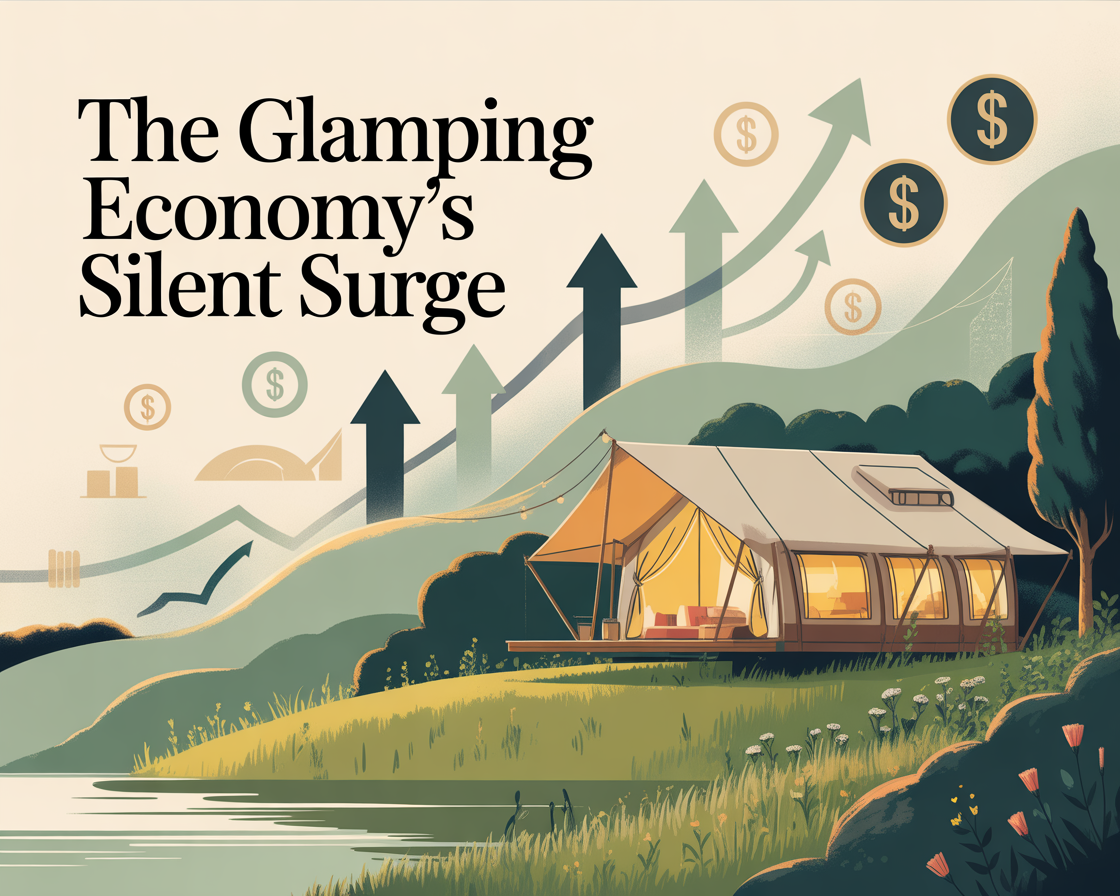
Imagine waking up to the sound of leaves rustling, birds singing and a light breeze flowing in through your window — then realizing you’re all bundled up in a pod, not a traditional tent or the backs of your sleeping bag. Welcome to Glamping Economy! This hybrid of glamour and camping is more than just a passing fad; it’s quietly revolutionizing how we experience the outdoors. With increasing numbers of people wanting to connect with nature without giving up their creature comforts, the glamping market has seen a remarkable upsurge. Wondering what powers this movement? Let’s explore its history and see why it’s winning hearts and wallets worldwide.
From Sleeping Bags to Smart Pods: The Evolution of Glamping
Glamping evolved out of the niche market of high-end camping for travelers who wanted to experience the great outdoors with a little more comfort. Early glamping accommodations ranged from yurts and safari-style tents to simple wooden cabins. These environments provided relief from the hardships of conventional camping, but people could still enjoy being outdoors in nature.
Eventually, through innovation and technology advancement, glamping was developed into the luxury glamping experience. Now travelers can reserve smart pods, eco-lodges, and modular cabins with heat, Wi-Fi, smart lighting and private bathrooms. This progression has brought glamping appeal for not only adventure seekers but also travelers who value comfort, sustainability and exceptional experiences in travel.
Who Is Driving the Surge in the Glamping Economy?
The glamping boom is supported by multiple demographics. Millennials and Gen Z travellers, in particular, are seeking out experiences that offer a mix of adventure and ‘Instagrammable’ aesthetics. They’re all about sustainable travel, unusual accommodations and Instagrammable places.
Also, boutique operators and entrepreneurs are beginning to see the potential of the market. Unlike hotels, which are capital-intensive, glamping units are scalable, flexible, and can deliver high returns on smaller upfront investment. This mix of customer demand and business opportunity is causing the sector to grow faster than ever.
A Global Market on the Rise
The glamping market has registered great growth all around the world. Based on the recent market research report, the global glamping market is projected to register a CAGR of more than 12% over the next five years. North America and Europe are two of the major continents witnessing glamping trends with luxury camps, safari-style tents, and cabin resorts seizing market attention. As for high growth market the Asia-Pacific region is expected to be the leading region, and popular nature-based tourism countries like Japan, Thailand, and New Zealand will contribute to market growth.
This expansion has also been influenced by a post-pandemic change in travel priorities. Travelers are also opting for destinations where they can enjoy privacy, spend more time outdoors and avoid large crowds, all of which glamping facilitates.
How Glamping Boosts Rural and Local Economies
Glamping isn’t just a fashionable way to enjoy nature — it’s an economic lifeline for rural communities. Glamping sites bring tourists looking for special experiences to the local communities. When travelers lodge at these high-end properties, they open their wallets for all kinds of services. Local eateries, shops and activity providers will often benefit from the increased foot traffic as well. That tide of activity helps sustain jobs and promotes the growth of small businesses.
Landowners, too, have an additional revenue stream by converting unused or underused spaces into revenue-generating glamping sites. This is great not only for them, but for their entire community. More foot traffic also leads to better infrastructure. The roads can be fixed up or upgraded to suit the requirements of the tourists. A rise in interest in outdoor activities could lead to funding for public amenities such as parks or rec centres.
The knock-on effect from glamping opens up opportunities that go further than the first outlay and enable rural economies to grow in a sustainable way.
Why Glamping Is Becoming a Highly Profitable Business Model
The glamping market is rapidly shaping up to be a lucrative business model. Unique accommodations are also going through an increase in popularity thanks to the rise of green travelers. Camping isn’t cutting it anymore – people want their adventures served with a side of comfort. Investors are betting on luxury tents, treehouses and yurts that provide once-in-a-lifetime experiences. These delightful retreats appeal not only to families but also to couples seeking romantic escapes and to wellness seekers.
Glamping sites, in particular, have lower overhead costs than traditional hotels. They need a lot less infrastructure and deliver amazing margins on premium pricing. Social media plays a big part, too. Stunning images grab the attention and inspire millennials, who are travel experience junkies. Brands that capitalize on this trend can also effectively connect with their target audiences by means of interactive content.
With plenty of people looking for more authentic experiences in nature but with modern conveniences, the glamping industry is booming and getting more profitable by the day.
Sustainability in Glamping: Trend or Core Foundation?
Sustainability is fast becoming a defining characteristic of the glamping market. The environmentally minded travelers are now looking for experiences that match their values, which is forcing operators to reconsider the norm. Many glamping sites are now powered by renewable energy and use sustainable materials in their structures. From solar-powered tents to cabins made from reclaimed wood, these options symbolize a dedication not just to luxury but to environmental stewardship.
Local sourcing is another key element. Through relationships with local farms and producers, glampers can enjoy fresh produce and handcrafted goods while supporting local economies. Furthermore, responsible waste management is coming to the fore in this industry. Glamping companies are increasingly implementing composting and recycling and taking other measures to lessen their ecological impact.
The emphasis on sustainability isn’t just a passing fad—it’s becoming an essential part of the core identity for many leading glamping operators as they serve a burgeoning demographic that places a greater emphasis on environmentally conscious travel.
Design Trends Powering the Next Wave of Glamping

The glamping future is decidedly design-forward and guest experience-led. Minimalist but luxurious interiors, panoramic windows and outdoor decks are now standard. Geo-centric designs immerse guests in their sights and sounds while smart technology provides convenience with app-controlled lighting, heating and security.
The demand for multi-use spaces is also reflected in design trends. A lot of glamping sites are now partnered with wellness retreats, adventure companies, or designed to support working remotely, catering to a range of audiences.
Key Risks and Challenges Facing the Glamping Industry
The glamping industry, although thriving, has its share of challenges. One big challenge is regulatory compliance. Local governments tend to have different rules when it comes to the use of land for tourist accommodations. Another worry is the effect on the environment. As they scale to meet demand, there’s pressure to be green and keep up with their facilities. It can be challenging for operators to walk that line.
There is the risk of overcrowding in the market. Some so many people want to be in this space that it is getting harder and harder to get noticed. Only by having something unique will you be able to grab the attention of travellers. Seasonal tourist-based businesses can experience a squeeze on cash flow. To stay afloat all year, they may have to modify marketing strategies and diversify their products in this changing climate.
What the Future Holds for the Glamping Economy
The future of the glamping economy seems vibrant and full of possibilities. Since more people prefer experiences over material goods, this trend will only continue. New and innovative accommodations will continue to come, with various options for any different taste and preference. From treehouses in verdant forests to plush safari tents, the choices are endless.
And technology will be critical as well. Smart amenities can improve comfort and at the same time offer solutions with a green touch, well-received by the now more earth-minded travelers. Partnerships between local artisans and glamping accommodations can also enhance the guest experience by sharing cultural heritage through one-of-a-kind designs and crafts.
And sustainability efforts might become basic standards instead of add-ons. Eco-lodges could pioneer the way for best practice in responsible tourism. And as city-dwellers look for a break from busy lifestyles, the countryside could flourish as a perfect place for these immersive retreats. The glamping market is set for incredible change.
Conclusion
The quiet rise of the glamping economy speaks to how experiential travel can be a powerful driver for positive economic and social change. Glamping has found a sweet spot in the hospitality industry that not only enriches rural economies or provides travelers with luxurious and immersive stays, but also offers a profitable, sustainable niche.
But as it continues to evolve, keeping up with design innovation, sustainability and personalized experience will be key. Glamping is not a passing trend; rather, it demonstrates how travel, business, and nature can work together in a sustainable way to bring growth to operators, joy to travelers, and benefits to communities around the world.
FAQS
1. What is glamping?
Luxury camping with comfort, style, and nature experience.
2. Why is glamping growing?
High demand for unique, eco-friendly, and Instagram-worthy stays.
3. How does it benefit local economies?
Creates jobs, supports local businesses, and boosts tourism revenue.
4. Is glamping profitable?
Yes, with higher revenue per night and lower operational costs.
5. What are its main challenges?
Seasonality, regulations, competition, and maintenance in remote areas.