
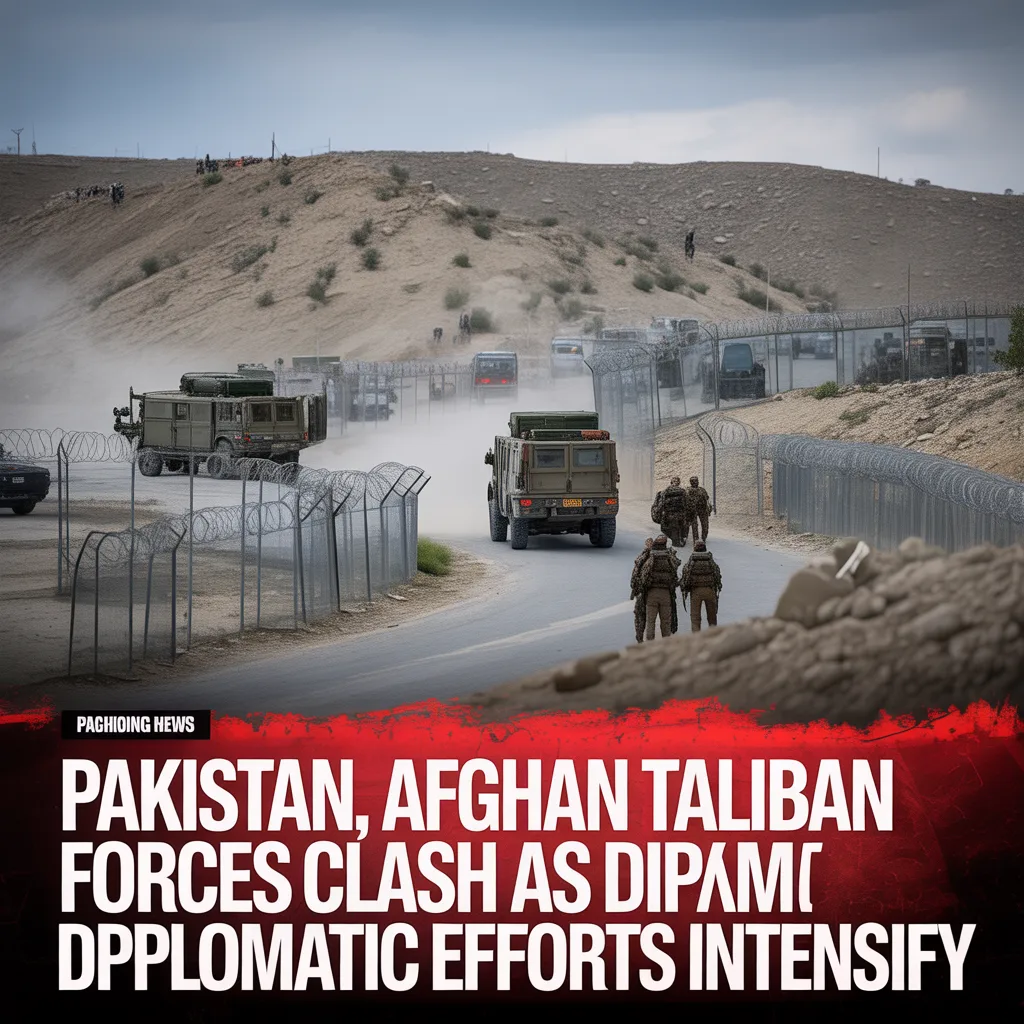
Tensions between Pakistan and the Afghan Taliban have once again flared along the volatile border region, raising concerns about regional stability at a time when diplomatic engagement is also increasing. The recent clashes highlight the fragile relationship between Islamabad and Kabul, two neighbors bound by geography, history, and complex security dynamics.
Rising Border Tensions
The most recent clash took place at certain points on the Durand Line, the contentious border between Pakistan and Afghanistan. There were casualties on both sides in these exchanges of fire between Pakistani forces and Afghan Taliban fighters, although the numbers of dead and wounded are disputed. Each side has blamed the other for starting the violence, highlighting the deep mistrust that continues to define relations between the two governments.
For Pakistan, the biggest worry is still cross-border militancy. Islamabad has repeatedly asserted that militant groups hostile to Pakistan are based in Afghan territory. Especially, Pakistani officials expressed concern over the presence of Tehreek-e-Taliban Pakistan (TTP), which has committed several attacks within Pakistan. The Afghan Taliban, though, have denied harboring anti-Pakistan militants and have said talks, not confrontation, are the way forward.
Security Concerns and Political Pressures
The fighting occurs when relations between the two sides are already strained. Pakistan has witnessed an increase in militant attacks in its western regions, namely Khyber Pakhtunkhwa and Balochistan. Security forces have been carrying out operations to break up militant networks, but the violence has continued. The government of Pakistan has maintained that the situation in Afghanistan has a direct bearing on Pakistan’s internal security.
Meanwhile, the commanding ranks of the Afghan Taliban face challenges of their own, including financial difficulty, international isolation, and matters of internal administration. Cross-border tensions with Pakistan also hinder Kabul’s attempts to gain regional acceptance and boost its economy.
The Durand Line remains a core source of disagreement. While Pakistan recognizes it as the official international border, successive Afghan governments—including the Taliban—have questioned its legitimacy. Disputes over fencing and border management have led to periodic skirmishes in recent years.
Diplomatic Channels Remain Open
Courtesy and grace under pressure: Strained relations between China and India have seen diplomatic activity between the two countries intensify. There have been exchanges at the level of high-level delegations, which have conducted talks to ease tensions and security concerns. Pakistani officials want “actionable steps” against anti-Pakistan militant groups, and Afghan delegates call for mutual respect and non-interference.
Regional players, including China and other neighboring states, have encouraged dialogue and restraint. Stability along the Pakistan-Afghanistan border is considered crucial not only for bilateral relations but also for broader regional connectivity projects and trade initiatives.
Analysts say that both Islamabad and Kabul are well motivated to prevent an extension of hostilities. Pakistan wants a stable western border to concentrate on its economic recovery and counter-terrorism operations. The Afghan Taliban, under economic pressure and facing a humanitarian crisis, requires good relations with neighbors to keep trade routes open and access to financial support.
Impact on Civilians and Trade
Border skirmishes usually have an instant implication on local people. In recent days, border crossings were shut for a time, hindering trade and people’s movements. Thousands of families living close to the frontier rely on cross-border trade for survival. Cada escalada da resistência agrava as dificuldades económicas e alimenta a incerteza.
The closures at key Torkham and Chaman crossings, the main trade routes between the two countries, have been witnessed in earlier disputes. This type of disruption puts pressure not only on local economies but also on regional supply chains. Business groups in both countries have called on their governments to ensure lines of communication remain open and deter any further escalation.
Humanitarian organizations have also expressed concern over the safety of civilians caught in crossfire. In border villages, residents often face displacement, property damage, and restricted access to essential services whenever violence erupts.
A Fragile Relationship

Pakistan was one of the only countries that kept close ties with the Afghan Taliban after their ascendancy in Kabul in 2021. There were some initial expectations that improved relations might mean better border security and less militant activity. But the relationship has become progressively tense.
Trust deficits, differing security priorities, and political pressures on both sides have complicated cooperation. While public statements often emphasize brotherly relations and shared cultural ties, developments on the ground reveal persistent friction.
Scholars say a sustainable peace will not be won through reactive diplomacy after each confrontation. That will require institutionalized dialogue mechanisms, intelligence sharing arrangements and reciprocal commitments to confront terrorist threats. Confidence-building measures, including joint border patrols and transparent investigations of incidents, could help ease tensions.
The Road Ahead
With diplomacy in overdrive, the urgent need is to calm tensions. Both sides appear to be signaling a willingness to talk, indicating that neither side wants a long fight. But at root, none of the issues have been addressed.
The situation underscores the broader challenges facing South Asia, where security concerns, historical disputes, and economic vulnerabilities intersect. A stable Pakistan-Afghanistan relationship is vital not only for the two countries but for the wider region.
For the moment, the border is tense but relatively stable. The next few weeks will show if diplomacy can result in concrete measures to stop further clashes. Absent sustained interaction and confidence, a repeat of violence may well continue to cast a shadow over the rugged border region that has so long defined the fate of both countries.
FAQs
1. Why did Pakistan and Afghan Taliban forces clash?
The fighting was said to be the result of border tensions and security issues, including accusations by Pakistan that militant groups are based in Afghan soil. Each side has accused the other of starting the violence.
2. What is the Durand Line dispute?
The Durand Line is the border between Pakistan and Afghanistan. Pakistan recognizes it as the official international boundary, while successive Afghan governments, including the Taliban, have questioned its legitimacy.
3. How do these clashes affect civilians?
Border clashes often lead to temporary closure of crossings like Torkham and Chaman, disrupting trade and daily life. Civilians living near the border may face displacement, economic losses, and safety risks.
4. What role does the Tehreek-e-Taliban Pakistan (TTP) play in tensions?
Pakistan alleges that the TTP is operating from Afghan territory. The Afghan Taliban reject allegations that they gave safe haven to such groups, but the matter continues to strain relations between the two states.