
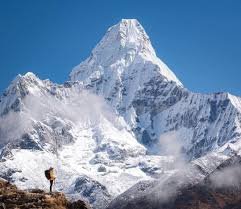
Where Is Mount Everest Located in the World? (Geographical Location Explained in Detail)
Mount Everest is situated in South Asia in the continent of Asia, part of the vast Himalayan mountain range that spans across five nations— India, Nepal, Bhutan, China (Tibet), and Pakistan. In particular, Mount Everest lies exactly on the border between Nepal and the Tibet Autonomous Region, China. This also means that no one country can claim the entirety of Mount Everest; The peak is divided between Nepal and China.
From a view of Earth from a Globes vantage point, Mount Everest is situated at 27.9881° N latitude, 86.9250° E longitude. These latitude and longitude coordinates locate it in a secluded, remote, high altitude place where the sky meets a craggy mountain pushed up for millions of years through a tug of war between the Indian tectonic plate and the Eurasian plate. It is this geologic collision that shaped the entire Himalayan range and made Everest the highest point on Earth.
On the south side in Nepal, Mount Everest is situated within the renowned Sagarmatha National Park, a UNESCO World Heritage Site recognized for its harsh alpine climate, glaciers, deep gorges, and endemic wildlife. The park is situated in the Solukhumbu District, which is the Sherpa people’s homeland, the renowned mountain guides who have been leading climbers to Everest for decades. On the Tibet side, Everest sits in Tingri County on the expansive and high Tibetan Plateau, known as the “Roof of the World.”
When individuals question, “Where is Mount Everest on the world map?,” the short answer is that the mountain is located in the Himalayas, straddling the border between Nepal and China (Tibet), bordered by India to the south. Although located in Asia, Mount Everest is so vast and remote that it might as well be in outer space, towering far above any other peak near it. Its position also subjects it to the extreme and unforgiving natural environment of one of the lowest oxygen levels on the planet, temperatures as low as −60 °C, and sudden storms.
Is Mount Everest in Nepal or China? Understanding the Border, Ownership, and Political Geography
One of the most frequently asked questions on the globe is, “Is Mount Everest in Nepal or China?” The answer should be: Mount Everest is in the two countries. The international border between Nepal and China bisects the summit of Mount Everest, dividing the peak between the two countries. That’s what makes Everest such a famous shared natural landmark on Earth.
The southern side of Mount Everest forms part of the border with Nepal and this is where the most popular trekking trails and villages can be found, as well as the climbing expeditions. The world-renowned South Base Camp, which is situated at an approximate height of 5,364 meters (17,598 feet), lies in Nepal. This base camp is accessed by trekking through the Khumbu Valley after a flight into the ridgetop village airstrip at Lukla Airport. Most commercial climbing expeditions opt for the Nepal route, which is more developed, has better infrastructure, and is backed by the Sherpa community.
The north side of Mount Everest is located in Tibet, China and features the North Base Camp, which rests at an altitude of 5,150 meters (16,900 feet). This side of Everest is approached by road from cities like Lhasa and Shigatse, so you can drive here, unlike on the Nepal side where you must trek for days. However, this route tends to be more tightly controlled by the Chinese, with fewer climbing permits and seasonal restrictions.
In the political context, Nepal and China also both recognise the summit as a point at which their natural borders meet. In 2020, the two countries issued a joint statement announcing an official height of 8,848.86 m (29,031.7 ft) for Mount Everest, resolving years of dispute over its actual height. This cooperation also symbolized a peaceful co-ownership of the highest mountain in the world.
From a cultural viewpoint, Mount Everest has profound spiritual significance on both sides of the border. In Nepal, it is called Sagarmatha, which means “Sky Goddess” in the Nepali language, derived from Sanskrit. It is called Chomolungma, ‘Goddess Mother of the World’ in Tibetan. These names demonstrate that the mountain is not merely a physical entity but a spiritual one that local communities consider sacred.
So when people ask, “Which country owns Mount Everest?”, the most accurate answer is that both Nepal and China share Mount Everest, politically, geographically, and culturally.
Where Is Mount Everest for Travelers, Trekkers, and Climbers? (Access Routes, Base Camps, and Surrounding Regions)

For travelers and adventure lovers, “where is Mount Everest” often means where you actually go to see it or climb it. The most popular and accessible route to Mount Everest is through Nepal, which has become the world’s most famous destination for high-altitude trekking and mountaineering.
The majority of trips to Mount Everest start in Kathmandu, the capital of Nepal. Then a short but adventure-filled flight to Lukla tiny mountain town perched on a steep mountainside with one of the world’s most hazardous airports. From Lukla, hikers have approximately an 8 to 12-day trek through the Khumbu Valley to arrive at Everest Base Camp. On the way, they shine through renowned villages like Namche Bazaar, Tengboche, Dingboche & Lobuche, embraced by lofty Himalayan peaks, prayer flags, glaciers & ancient monasteries.
The Nepal route to Everest gives visitors a close look at Sherpa culture, Buddhist traditions, suspension bridges, and dramatic mountain landscapes. Even people who never plan to climb Everest still visit the base camp simply to witness the mountain with their own eyes. For many travelers, reaching Everest Base Camp is considered one of the greatest trekking achievements in the world.
In China, Mount Everest is reached by long, high-altitude roads across the Tibetan Plateau. Most tourists begin in Lhasa, then head west to Shigatse before driving on to Rongbuk Monastery, the highest monastery in the world. Near this monastery is the North Base Camp of Everest, which provides one of the closest non-trekking views of the mountain. This side of Everest is also colder, windier and more remote, yet it boasts breathtaking 360-degree views of Everest’s north face.
For climbers, Everest has two main ascent routes:
- The Southeast Ridge Route from Nepal (the most commonly used path).
- The Northeast Ridge Route from Tibet (more technical and politically restricted).
Both routes are extremely dangerous and require months of preparation, proper permits, professional guides, and physical conditioning. Despite modern equipment, Mount Everest still claims lives every year due to avalanches, altitude sickness, storms, and extreme exhaustion.
In practical travel terms, Mount Everest is not a single tourist spot but a massive high-altitude region spread across two countries, reachable only through careful planning, long journeys, and respect for nature.
Why Is Mount Everest Located Where It Is? (Geology, Height, and Natural Formation of the Himalayas)
Mount Everest’s position is no accident; it is the outcome of one of the greatest geological upheavals in the history of the planet. About 50 million years ago, the Indian tectonic plate started colliding with the Eurasian plate. The plates don’t just slide underneath each other, they crumple and fold as they compress, gradually pushing rock up into towering mountain ranges. This continuing collision produced the whole Himalayan mountain range, including Everest.
Even today, Mount Everest is still growing. Scientists estimate that Everest rises by about 4 millimeters per year, although earthquakes can sometimes reduce its height slightly. The 2015 Nepal earthquake, for example, shifted parts of the Himalayas and led to renewed surveys of Everest’s height.
Mount Everest’s exact position at the edge of the Tibetan Plateau means it experiences some of the most extreme environmental conditions on Earth. The air at the summit contains only about one-third the oxygen available at sea level, making survival without supplemental oxygen nearly impossible. Temperatures at the top can drop below –60°C, and winds can exceed 200 km/h (125 mph) during powerful jet stream conditions.
Despite these extreme conditions, the location of Mount Everest has also allowed unique ecosystems to survive at lower elevations. The forests and valleys below Everest support rare animals such as:
- Snow leopards
- Red pandas
- Himalayan tahr
- Musk deer
These ecosystems exist only because of the altitude gradients created by Everest’s towering presence.
The mountain’s unique position also makes it highly visible from great distances on clear days, especially from nearby peaks like Kala Patthar, which offers one of the most famous views of Everest from the Nepal side.
Final Conclusion
Knowing where Mount Everest lies is more than just knowing a dot on the map. What we’re talking about here is the understanding of its location between Nepal and China, in the Himalayan mountain range, in deep cultural importance and in an extreme natural environment. Mount Everest has become a potent image for the power of the earth’s geology, the aspirations of humanity, and the limits of physical endurance. From the valleys of Nepal to the plateaus of Tibet, Everest is still the ultimate landmark of the earth.
Frequently Asked Questions (FAQs) – Where Is Mount Everest
1. Where is Mount Everest located exactly?
Mount Everest is located in the Himalayan mountain range in Asia, directly on the border between Nepal and the Tibet Autonomous Region of China.
2. Is Mount Everest in Nepal or China?
Mount Everest lies between Nepal and China. The southern face is in Nepal, and the northern face is in Tibet (China). The peak itself is divided between the two nations.
3. In which continent is Mount Everest located?
Mount Everest is located on the continent of Asia.
4. What are the exact coordinates of Mount Everest?
The exact coordinates of Mount Everest are approximately:
27.9881° North latitude and 86.9250° East longitude.
5. Which mountain range is Mount Everest part of?
Mount Everest is part of the Himalayas, specifically the Mahalangur Himal sub-range.
6. Where is Mount Everest Base Camp located?
There are two base camps:
- South Base Camp is in Nepal (5,364 meters)
- North Base Camp is in Tibet, China (5,150 meters)
7. What is Mount Everest called in Nepal and Tibet?
- In Nepal, Mount Everest is called Sagarmatha
- In Tibet, it is called Chomolungma.
8. Why is Mount Everest so high?
The reason why Mount Everest is so tall is because of the Indian and Eurasian tectonic plates colliding and pushing the Earth’s crust up for millions of years.
9. Can tourists visit Mount Everest without climbing it?
Yes, tourists can visit Everest Base Camp in Nepal by trekking and North Base Camp in Tibet by road without climbing the mountain.
10. Which country is best for seeing Mount Everest?
Nepal is the best country to get a close-up view of Mount Everest thanks to its popular trekking routes, clear views, and the Sherpa culture.